Location QR Code Uses: Real-World Examples, Benefits, and Practical Applications (2026 Expert Guide)
Quick Summary: A location QR code enables instant navigation by allowing users to scan and open a map location directly on their phone. It eliminates the need to type addresses and improves speed, accuracy, and mobile usability. In real-world usage, location QR codes are most effective when placed at decision points, where users are ready to act, not just browse.
TL;DR
Location QR codes allow users to scan and instantly open directions on their phone. They are most useful in offline scenarios like packaging, events, and signage where typing an address is inconvenient. By removing friction, they improve navigation speed, accuracy, and user experience.
Key Facts
- A location QR code opens a map location instantly on scan
- Works with apps like Google Maps and other navigation tools
- Eliminates the need to type or copy addresses
- Most effective in offline-to-online use cases
- Each QR code is unique to a specific location or map link
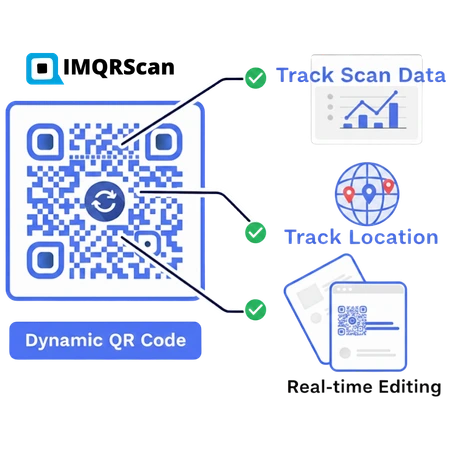
- Can support dynamic QR updates if linked to editable URLs
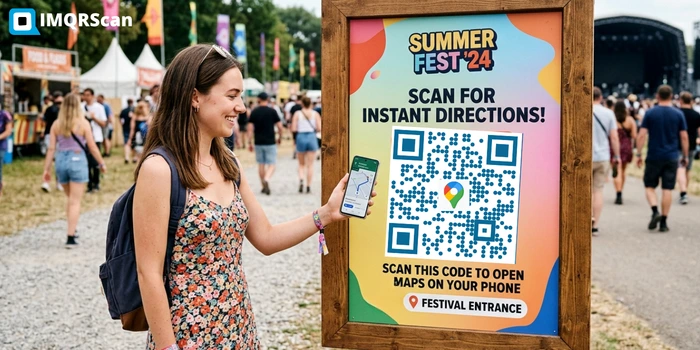
Table of Contents
Create a Location QR Code
Turn a Google Maps or location link into a scannable QR code with IMQRScan.
Create Location QR Code Start Free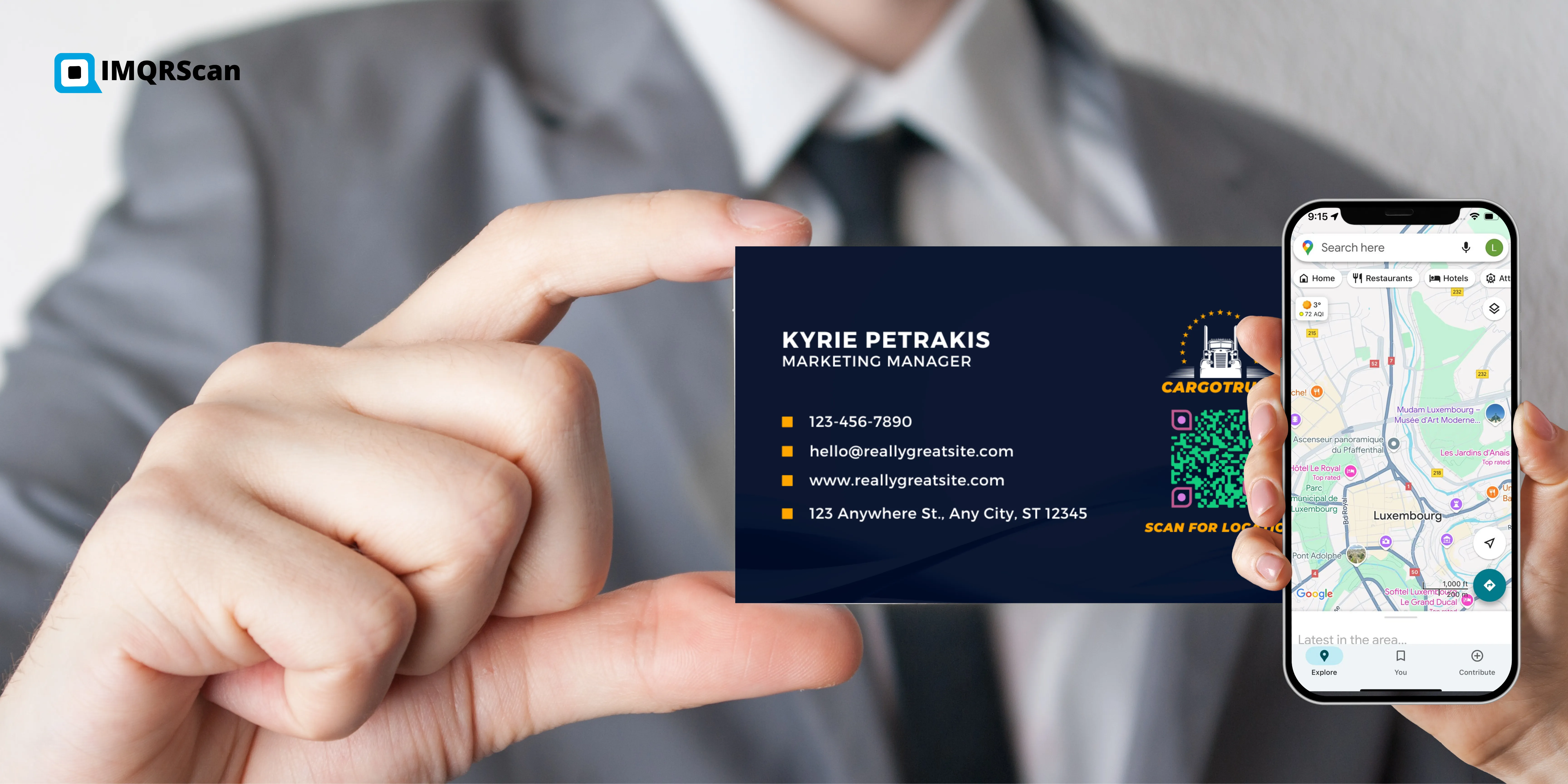
What Is a Location QR Code?
Definition: A location QR code is a scannable code that instantly opens a precise geographic location inside a navigation app such as Google Maps or Apple Maps.
Instead of manually typing an address, users scan the code and are redirected directly to navigation, often with turn-by-turn directions.
In simple terms, it converts any physical or digital surface into a one-scan navigation system.
Yes, because it removes the entire input step and directly triggers navigation, which is significantly faster and more accurate on mobile devices.
📍 Why Location QR Codes Matter in 2026
A location QR code is also part of a wider shift toward frictionless local discovery. Instead of searching manually, type an address, or switch between apps, it creates a direct bridge from a printed or shared surface to a live navigation experience.
As of recent global estimates, over 90% of smartphone users can scan QR codes directly using their camera, making QR-based navigation one of the most accessible and widely adopted digital interactions today.
Navigation behavior has fundamentally shifted.
- Users expect instant access
- Mobile-first interaction dominates
- Offline-to-online journeys are increasing
With billions of smartphone users, location QR codes act as a bridge between:
- Physical touchpoints (posters, packaging, signage)
- Digital navigation systems
This makes them highly effective for real-world conversions like store visits and event attendance.
While URL QR codes and links work digitally, QR codes outperform them in offline environments where scanning is faster than copying or typing URLs.
9 Real-World Uses of Location QR Codes (With Practical Context)
1. Driving Foot Traffic to Physical Businesses
Businesses place QR codes where discovery happens, not where conversion is expected.
For example, a restaurant prints a QR code on:
- Packaging
- Flyers
- Outdoor banners
A user scans → directions open instantly → visit happens.
In practice, businesses see better results when QR codes are placed where users already have intent, such as packaging or exit points, rather than generic ads.
For example: Many cafés and cloud kitchens place location QR codes on delivery packaging so customers can easily find the physical store later. This has proven effective in converting online customers into walk-in visitors.
Explore more about QR code for small Business.
Yes, because they remove friction between interest and action, especially in high-intent scenarios.
2. Event Navigation Without Confusion
Events frequently suffer from poor navigation clarity.
Common issues include:
- Complex venues
- Multiple entry points
- Lack of clear directions
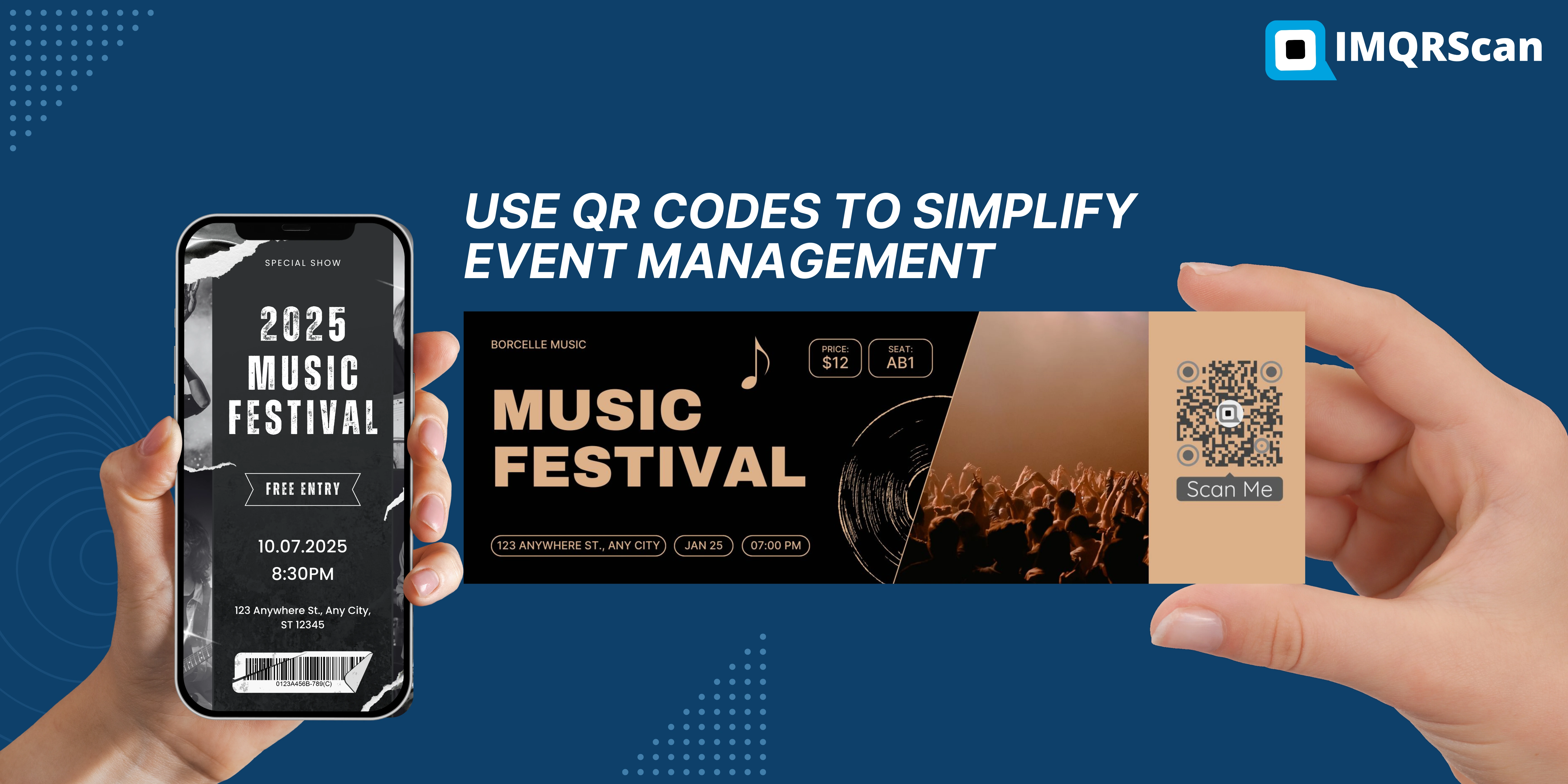
By adding a QR code to tickets or confirmations using an event QR code generator, attendees can directly access the exact location pin.
From real-world usage, most navigation issues happen not because of distance, but because of unclear entry points, something QR codes solve effectively.
For example: Event organizers frequently include QR codes on digital tickets to guide attendees to exact venue entrances, reducing confusion in large or multi-entry locations.
In most cases, yes, because they eliminate confusion and provide precise navigation instantly.
3. Real Estate Site Visits & Property Discovery
Location is one of the strongest decision factors in real estate.
Agents use QR codes on:
- Property boards
- Brochures
- Listings
Users scan → open map → evaluate accessibility immediately.
Learn more about Real Estate QR Code Marketing Benefits.
Yes, because buyers can instantly visualize surroundings and travel routes instead of manually searching.
4. Tourism & Self-Guided Exploration
Modern travelers prefer independent exploration over guided tours.
QR codes enable:
- Instant navigation to landmarks
- Discovery of nearby places
- Seamless movement across locations
Explore Uses case for Travel and Tourism.
Not entirely, but they significantly enhance self-guided experiences by removing navigation barriers.
5. Personal Location Sharing (Simplified)
Sharing locations manually often leads to:
- Miscommunication
- Incorrect pins
- Delays
QR-based sharing simplifies this into: Scan → open → navigate
A Location QR code is one of the simplest options, especially when sharing via images or printed formats.
6. Safety & Emergency Identification
This is one of the most overlooked yet powerful use cases.
QR codes can be placed on:
- ID cards
- Emergency kits
- Personal belongings
They link directly to a home or safe location.
Yes, they provide instant, actionable location data without requiring explanation.
7. Educational Tours & Campus Navigation
Large campuses create navigation challenges.
QR codes placed at key points allow users to:
- Move between locations
- Follow structured routes
- Stay aligned with group activities
Yes, because they are interactive, dynamic, and always accessible via mobile. opens directly in Google Maps with turn-by-turn directions
8. Local Business Discovery Systems
Communities use QR codes like business profile QR codes to build local discovery ecosystems.
Example:
Scan → open nearby businesses → navigate instantly
They can, by improving visibility and reducing effort required to find locations.
9. Real-Time Location Sharing for Events
Dynamic gatherings require flexible navigation.
QR codes linked to live locations help users:
- Track moving venues
- Stay updated
- Reach the correct spot without confusion
Real Usage Insight
Location QR codes perform best when placed at decision points, such as packaging, event tickets, or entry points, where users are ready to act rather than just browse.
Yes, especially when connected to dynamic QR codes that update in real time.
Create your own location QR code in seconds
Generate NowWhere Location QR Codes Deliver the Most Value
| Area | Impact |
|---|---|
| Retail | Higher footfall |
| Events | Better attendance |
| Real Estate | Faster site visits |
| Tourism | Improved experience |
| Personal Use | Easier coordination |
When should you use a location QR code?
Use it when users need instant navigation from offline materials like posters, packaging, or event tickets.
According to industry reports, QR code scans have increased by over 50% globally in the last two years, with location-based QR codes being one of the fastest-growing use cases in retail and events.
Location QR Code vs Traditional Navigation Methods
| Method | User Effort | Accuracy | Speed |
|---|---|---|---|
| Typed Address | High | Medium | Slow |
| Map Link | Medium | High | Medium |
| Location QR Code | Low | Very High | Instant |
QR codes remove friction completely by eliminating input steps.
Platforms like IMQRScan are commonly used to create reliable location QR codes with high scan accuracy and customization.
❌ When Location QR Codes Are NOT the Right Choice
They are effective, but not universal.
Avoid using them when:
- Users are already inside navigation apps
- The audience has limited smartphone access
- The location is sensitive or private
No, they are most effective when they reduce friction, not add unnecessary steps.
💡 Why QR-Based Navigation Is Growing Rapidly
Users prefer QR codes because they:
- Require zero effort
- Minimize errors
- Work instantly on mobile
- Connect offline discovery to digital action
This aligns directly with modern user behavior.
Future of Location QR Codes
The evolution is already visible:
- Smart city navigation systems
- Augmented reality overlays
- Contactless travel experiences
- IoT-connected environments
QR codes are shifting from marketing tools to navigation infrastructure.
🧩 Choosing a Reliable QR Code Platform
To ensure accuracy and usability, it’s important to use a reliable platform like the best QR code generator from IMQRScan.
A strong platform ensures:
- Accurate location encoding
- High scan reliability
- Customization options
- Error correction support
Final Insight
Location QR codes represent a shift in how people interact with physical spaces.
They:
- Remove friction
- Improve accuracy
- Enable instant navigation
As mobile-first behavior continues to grow, QR-based navigation is becoming a standard expectation rather than a convenience.
In practical terms, location QR codes are no longer optional for businesses and events, they are becoming a standard expectation for seamless navigation.
Ready to create a location QR code?
Turn any map link into instant mobile navigation with IMQRScan.