App Download QR Code Generator
Paste your App Store or Google Play link, download a branded QR code, and put it wherever your users are. Print it on packaging, add it to your website, use it in ads, or place it on flyers, posters, receipts, and event material. When someone scans the code, your app page opens instantly.
Create your app download QR code in under two minutes. No account is needed for a basic static code.
- App Store, Google Play, or smart landing page URL
- One QR code for iPhone and Android users
- Logo, colors, frame, and shape customization
- PNG, SVG, and PDF download formats
- Dynamic routing, scan tracking, and editable destinations
Can I create a QR code for app download?
Yes. Paste your App Store or Google Play URL into IMQRScan, customize the design, and download.
Can one QR code work for both stores?
Yes. Use a smart landing page or a dynamic QR code with platform routing for iPhone and Android users.
Can I track app QR code scans?
Yes. Dynamic app QR codes can show scan count, device type, location, and scan time.
Create a QR Code for App Download
How it works: paste your App Store or Google Play URL into IMQRScan, customize the design, and download. Anyone who scans the code goes directly to your app’s store listing and can install from there. One code, one scan, one tap to install.
Getting someone to download an app from a physical surface, a product box, a poster, a business card, a receipt, or a flyer, used to mean printing a long URL and hoping they would type it. Nobody wants to type App Store or Google Play URLs. An app download QR code fixes that completely. The scan takes about a second. The store page opens. The user installs the app the same way they normally would.
There is one important thing to know before you start: a standard static QR code can only hold one URL. If your app is on both the App Store and Google Play, a single QR code pointing to one store may not work properly for half your audience. The cleaner solution is a smart landing page or a dynamic QR code with platform routing.
Quick answer
Copy your App Store or Google Play link, paste it into the App Download QR Code Generator, customize the design, and download as PNG, SVG, or PDF. For one code that works on both iOS and Android, use a dynamic code with platform routing or link to a landing page that contains both store buttons.
How to Create a QR Code for App Download
Follow these steps to create an app download QR code for your mobile app.
Step 1: Copy Your App Store or Google Play Link
Go to the App Store or Google Play and open your app’s listing page. Copy the full URL from the browser address bar.
App Store URL usually looks like:
https://apps.apple.com/app/your-app-name/id123456789
Google Play URL usually looks like:
https://play.google.com/store/apps/details?id=com.yourapp
Use the actual app listing URL. Do not copy a search results page. Do not use a random short link or redirect if you can avoid it. The cleaner your destination URL is, the easier it is to test and manage later.
If your app is available on both platforms, do not paste one store URL and hope for the best. Create a simple smart landing page with “Download on iPhone” and “Get it on Android” buttons, or use a dynamic QR code with platform routing.
Step 2: Choose Static or Dynamic QR Code
This decision matters more for app download QR codes than for many other QR types. App listing URLs can change when apps are rebranded, moved to another developer account, updated, or relaunched.
A static QR code is free, simple, and permanent. It works well when you have one stable app link and do not need tracking or editing.
A dynamic QR code is better when you want to update the destination later, track scans, or send iPhone and Android users to different app stores automatically.
For packaging, trade show materials, flyers, posters, product inserts, and anything printed in volume, a dynamic QR code is the safer choice.
Step 3: Paste Your App Store, Google Play, or Landing Page URL
Open IMQRScan’s App Download QR Code Generator and paste the URL into the input field. A live preview of the QR code appears immediately, and you can start customizing from there.
If you are using a landing page URL instead of a direct store link, paste that page URL. The QR code treats it like any other URL, but the landing page gives users a choice between App Store and Google Play.
If you are using a dynamic code with platform routing, you can set your iOS and Android destinations so each user goes to the correct store.
Step 4: Customize Your QR Code Design
The default black-and-white code works perfectly well. If you want the QR code to look like it belongs to your product or app, customize it.
Add your app icon or brand logo in the center of the code. Change the dot color to match your brand, but keep dark dots on a light background for scan reliability. Add a frame with a short label such as “Scan to Download,” “Get the App,” or “Download Free.” You can also adjust the dot and corner marker style for a more distinctive look.
Keep it scan-safe. Whatever color choices you make, keep the contrast between the code dots and the background high. Medium gray on white can cause scanning failures in lower light. Dark is better.
One design note: if you are using both an App Store badge and a Google Play badge near the QR code, do not overcrowd the QR code itself. Keep the center logo simple, your app icon is enough.
Step 5: Download and Test Your QR Code
Download your QR code in the format that matches how you will use it.
SVG is best for physical print material. It stays sharp at any size and should be used for packaging, posters, flyers, and printed ads.
PNG is best for digital use such as app websites, landing pages, social media, email campaigns, and digital ads.
PDF is useful when sending a print-ready file to your printer or designer.
Before printing or publishing, test the QR code on both iPhone and Android. Open the camera on each device, scan the code, and confirm that the correct store page opens. If you used a smart landing page, check that both the App Store and Google Play buttons work correctly.
Want to understand the user-side scanning process? Read our guide on how to download an app using a QR code .
If you printed a test copy, scan the physical print, not only the screen. Glossy paper, laminate, foil, dark backgrounds, and small print sizes can affect scan reliability.
No account needed for a basic static code
One QR Code for App Store and Google Play
A QR code is a container for one destination. If that destination is an App Store link, Android users may end up in a browser instead of the Play Store. If the destination is a Google Play link, iPhone users may face the same problem. There are three practical ways to handle a cross-platform app.
Smart Landing Page
Create a simple webpage with two download buttons, one for the App Store and one for Google Play. Put that landing page URL into the QR code. Any device that scans it opens the page and taps the right button.
This is the most flexible option because you control the page, you can update it any time, and you can add screenshots, app benefits, app store ratings, feature highlights, or analytics.
This option is also useful when you want one QR code but do not want to rely on advanced routing.
After Scan
One QR code opens one landing page with both store buttons.
Dynamic QR Code with Platform Routing
A dynamic QR code with platform routing can detect whether the scanner is using iOS or Android and redirect the user to the correct store automatically.
With IMQRScan, you can use a dynamic code to enter both your App Store URL and your Google Play URL. When someone scans on iPhone, they go to the App Store. When someone scans on Android, they go to Google Play. The printed QR code stays the same for both users.
This is useful for product packaging, event giveaways, printed ads, posters, and general campaigns where you cannot control who will scan the code.
Smart Routing Flow
iPhone
App Store
Android
Google Play
One scan, right store, no extra tap.
Two Separate QR Codes
You can also print two separate QR codes: one for iPhone users and one for Android users. This is practical if you have enough space and can clearly label each code.
For example, you can place one code under “Download on the App Store” and another under “Get it on Google Play.” It is simple, but it uses more design space and can make small layouts look crowded.
App Store QR
Google Play QR
Clear, but needs more print space.
Which App Download QR Setup Should You Use?
Choose the best setup based on your app platform, print space, and campaign goal.
iOS Only
Use a direct App Store link.
Best: App Store URLAndroid Only
Use a direct Google Play link.
Best: Google Play URLiOS + Android
Use a landing page or dynamic routing.
Best: One QR for bothPrinted at Scale
Use a dynamic QR code.
Best: Editable QRQuick Setup Recommendation
Use this table when choosing the safest QR setup for your app campaign.
| Scenario | Best Link Type | Why |
|---|---|---|
| App is iOS only | Direct App Store link | One clear destination |
| App is Android only | Direct Google Play link | One clear destination |
| App is on both iOS and Android | Landing page or dynamic routing | Works for both platforms |
| Small print area | Landing page URL | One clean code |
| Large print area | Dynamic code or two separate codes | More flexibility |
| Campaign with tracking needed | Dynamic QR code | Scan analytics and routing |
| Packaging printed in high volume | Dynamic QR code | Update destination without reprinting |
Free App Download QR Code Generator
Static app download QR codes are free with no account required on IMQRScan. Paste the URL, customize the design, and download. That is the full free experience for a basic code.
A free static QR code is a good choice if you are early in your app launch and only need a simple QR code for one stable app page.
Dynamic features are better when you need platform routing, scan analytics, the ability to edit the destination URL after printing, or management across multiple codes and campaigns from a dashboard.
If you are distributing QR codes across a print run of thousands and want to understand how many users scanned from packaging, posters, or event materials, the dynamic option is usually worth it.
Static vs Dynamic App Download QR Codes
The type of code you choose has real practical consequences, especially when you are printing at scale.
| Feature | Static QR Code | Dynamic QR Code |
|---|---|---|
| Free to generate | Yes | Yes, free plan available |
| Platform routing | No, one URL only | Yes, iOS to App Store, Android to Google Play |
| Edit destination after printing | No, reprint required | Yes, from dashboard |
| Scan analytics | None | Scans, device type, location, and time |
| App URL changes after launch | Reprint all materials | Update in minutes |
| Best for | Single store and simple one-off use | Cross-platform apps, print campaigns, and scale |
One scenario where this matters a lot: app store URLs can change. If you update your app bundle ID, move your app to a different developer account, change your listing structure, or rebrand your app, the URL may change. A static QR code printed on packaging, posters, or product inserts could point to a dead page. A dynamic QR code lets you update the destination without changing the printed code.
Common Mistakes When Creating App Download QR Codes
Avoid these common mistakes to make sure every scan leads users directly to your app.
Using a Search Page URL
Always copy the actual App Store or Google Play listing URL. Search result pages can change and often do not open your app directly.
Using One Store Link for Everyone
If your app is available on both iPhone and Android, use a landing page or dynamic platform routing instead of linking to only one store.
Printing a PNG at Large Size
Use SVG for posters, packaging, banners, and printed materials. SVG stays sharp at every size.
Making the QR Code Too Small
Small QR codes are difficult to scan. Print a test copy before ordering thousands of labels or packages.
Not Testing Both Platforms
Always scan your QR code using both an iPhone and an Android device before launching your campaign.
Using a Static QR for Printed Campaigns
If your app URL changes after printing, a static QR cannot be updated. Choose a dynamic QR code for packaging, posters, and long-term campaigns.
Track App Download QR Code Scans
With a dynamic QR code, IMQRScan can show total scans, scan timestamps, device type, and geographic location. You can see how many times the code was scanned and which placement created engagement.
For app developers and marketers, this fills a specific gap. App store install attribution can be difficult. QR scan data gives you a cleaner signal: how many people scanned your packaging insert, conference poster, product flyer, print ad, or store display.
You can use scan data together with your app store install timeline to understand QR-driven interest. It is not perfect attribution, but it gives you more visibility than a static code with no tracking.
Learn More About QR Code TrackingTrackable QR Scan Data
Useful insights for app campaigns and print placements.
Total Scans
See total scans across all time.
Scan Periods
Compare scans by date or campaign period.
Device Type
View iOS and Android scan split.
Location Data
Understand country or city-level scan activity.
Timestamps
Compare scan activity with app launches, print campaigns, events, and promotions.
Where to Use App Download QR Codes
Use app download QR codes anywhere you already reach potential users.
Packaging
Help customers install your companion app right after opening the product.
Flyers & Ads
Turn printed ads, posters, and handouts into direct app install paths.
Events & Cards
Let people install your app after a meeting, demo, booth visit, or pitch.
Websites
Let desktop visitors scan with their phone and open the app store instantly.
Want more app QR code examples?
See how businesses use app download QR codes on packaging, posters, receipts, ads, stores, and launch campaigns.
See Use CasesApp Download QR Code FAQs
Common questions about creating QR codes for mobile app downloads.
Related App Download QR Code Guides
Continue with app QR creation, business use cases, troubleshooting, dynamic routing, and scanning guides.
App Download QR Code Generator
Create a QR code for your App Store, Google Play, or smart app landing page.
Open Tool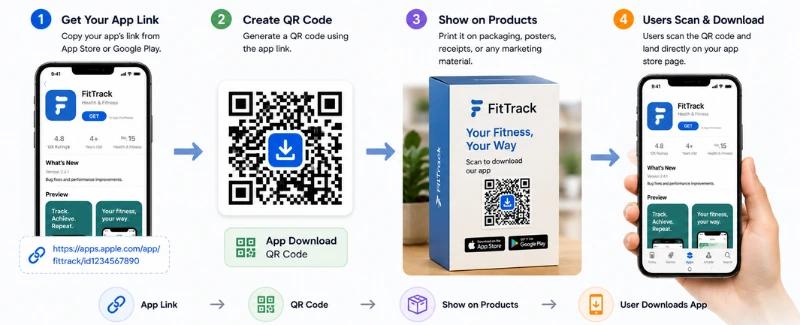
App Download QR Code Uses
Learn what app download QR codes are and how businesses use them on packaging, posters, receipts, and ads.
Read Guide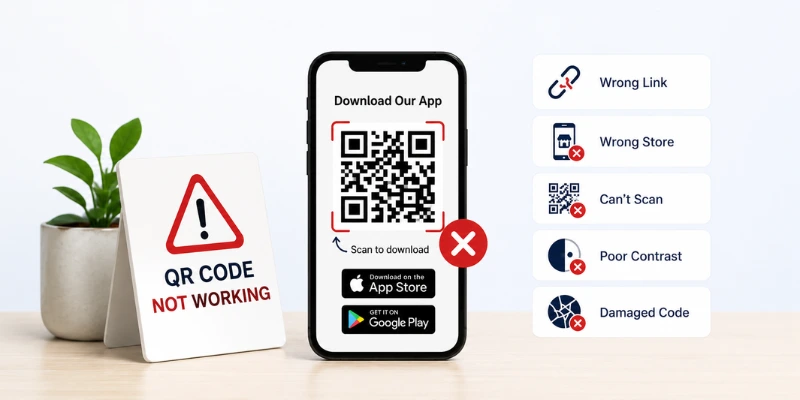
App QR Code Not Working
Fix app QR code issues like wrong store links, blurry print, poor contrast, broken URLs, and scan failures.
Read Guide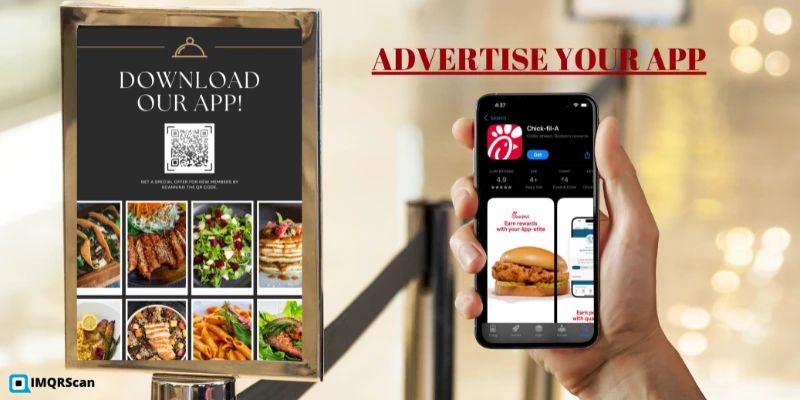
Download App Using QR Code
Learn how to scan an app QR code on iPhone or Android and safely install the app from the official store.
Read GuideTry out your first Dynamic QR code now.
You will experience great benefits from the new revolution of QR codes. Within one minute
Create Free QR Code